
People ask me sometimes—what’s your thing? What makes Morton different? And I usually fumble around for a second because I don’t have a nice neat answer ready. But if I’m being honest, it’s actually pretty simple.
We just care about making things properly.
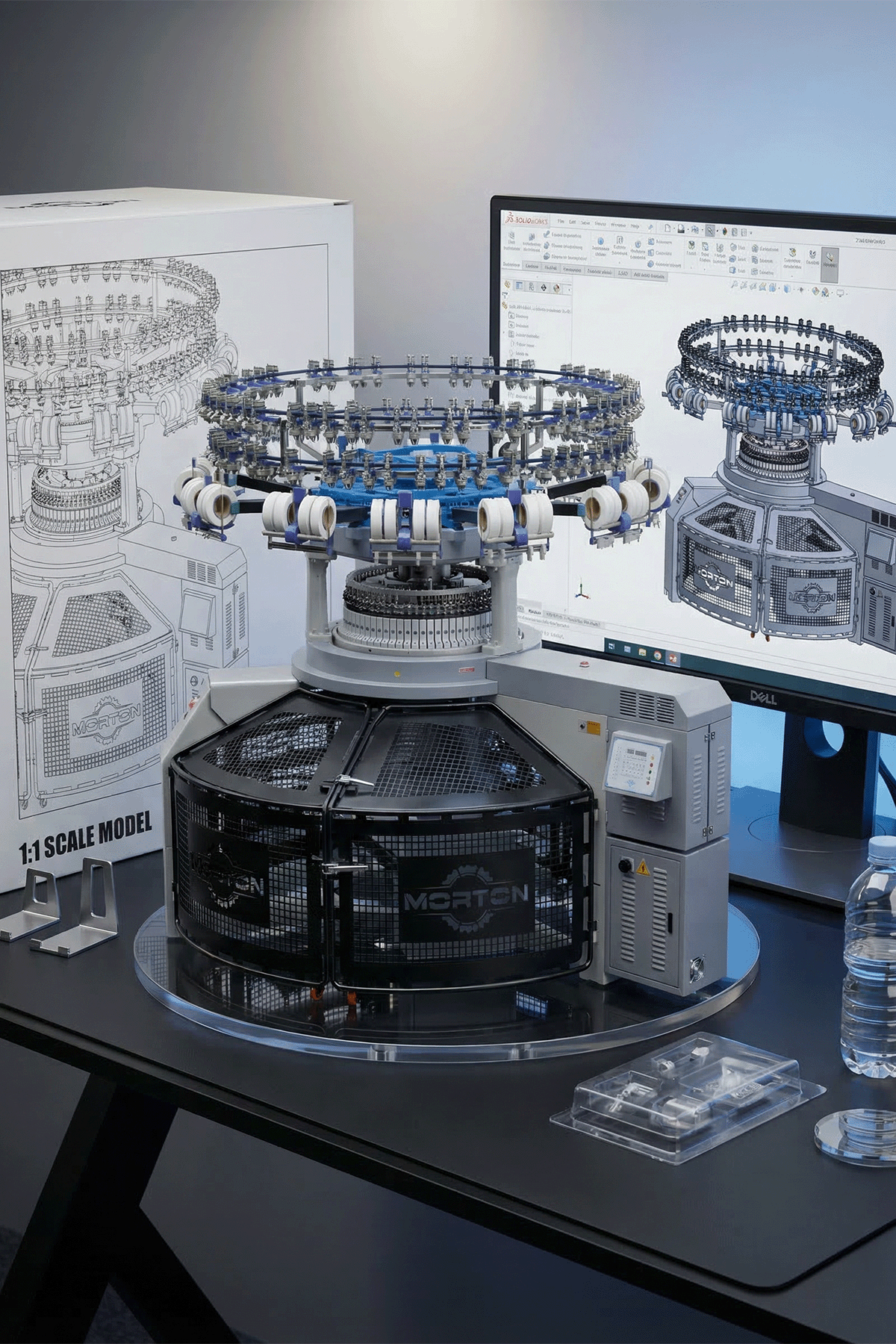
Not the kind of “quality” you put in a tagline. I mean the unglamorous, everyday stuff. The kind that doesn’t show up in a brochure. Tolerances that are tighter than they strictly need to be. Spending an extra hour on a Circular Machine because the fabric didn’t look quite right under a certain light. Nobody writes press releases about that. But that’s where we put our energy.
I was walking through the workshop last week and saw one of our senior techs, the quiet guy who’s been here forever, pulling apart an Interlock Machine that was already assembled. I asked him what was up. He said he didn’t like how the cam alignment felt on one section. The machine was within spec—passed all the usual checks. But he said, and I quote, “it’s not how I want it to feel.” So he spent the afternoon taking it apart and setting it again. That’s the kind of stubbornness that lives here. Nobody asked him to do it. He just has his own standard.
That’s really what we’re about. Not chasing the latest buzzwords—automation, AI, all that stuff. I mean, sure, those things matter. But underneath all of it, what actually keeps a mill running is simple: does the machine do what it’s supposed to do, shift after shift, without turning into someone’s headache?
We’ve been doing this long enough to know that fancy features don’t matter if the basics aren’t solid. A Circular Machine that drops stitches after six hours isn’t a machine, it’s a problem. An Interlock Machine that needs constant tweaking isn’t helping anyone. So we spend our time on the boring stuff. Oil flow. Needle quality. Castings that don’t flex under load. Things you never see unless you’re the one who has to keep the line running.
I remember a customer from a few years back—mills in Southeast Asia—who told me something that stuck. He said he doesn’t care about the theoretical max speed. He cares about the speed he can run without someone standing there watching it. That’s the number that pays his bills. Ever since then, that’s kind of been our benchmark. Not what the machine can do on paper, but what it can do quietly, consistently, when nobody’s paying extra attention.
It’s not a grand mission. Honestly, sometimes I worry it sounds too simple. But after twenty-something years in this business, I’ve learned that simple is actually harder than it looks. Anyone can throw together a machine that works for six months. That’s not the hard part. The hard part is making sure it still runs the same way after two years, after three shifts, after a thousand different yarn batches.
So that’s what we do. No big announcements. No flashy marketing campaigns. Just a bunch of people who don’t like the idea of sending out something that isn’t right. It’s probably not the most exciting way to run a business, but it works for us.
Morton — Advanced Knitting Solutions
Post time: Mar-27-2026