
We get asked this sometimes. Why Quanzhou?
There's the obvious answer. It's where the parts are. The needles, the cams, the bearings—you can find most of what goes into a circular knitting machine within a fifty-kilometer radius. That helps. But that's not the real answer.
The real answer goes back further.
Quanzhou was called Zayton back then. Marco Polo passed through in the 13th century. He wasn't a textile engineer, but even he noticed something. He wrote about the damasks and velvets made here, saying they were better than what he'd seen in the big northern cities. He said the cloth was named after the city itself.
I've always liked that detail. We weren't just a port moving boxes around. We were the place making the thing that everyone wanted.
For a long time, that meant silk. Now it means circular knitting machines. The materials changed. The tools changed. But the idea stuck around: make it here, make it good, send it out.
There's another layer to the Quanzhou story that doesn't make it into the history books. A lot of the early precision engineering in this region—the kind you need to build a reliable interlock machine—came from Taiwanese expertise. Over a generation, that knowledge settled here, mixed with local manufacturing, and evolved into something distinctly Quanzhou. It's practical. It's not about fancy software; it's about a machine that can run three shifts in a humid factory without throwing a tantrum.
Walking through a supplier's workshop here is different. You're not just buying a component. You're talking to someone whose father made needles, or whose uncle spent forty years getting cam profiles just right. That matters when you're trying to build a machine that needs to hold its tolerances after 8,000 hours.
History is nice to talk about, but it doesn't keep a production line moving.
What keeps it moving is the fact that when we design a Morton machine, we're not doing it in an office tower in a city with no factories. We're doing it surrounded by the noise of actual production. If a bearing runs hot, we know who to call. If a new yarn blend from Turkey is giving us trouble, we can test it down the street.
So when someone asks why Quanzhou, I don't usually bring up the Maritime Silk Road.
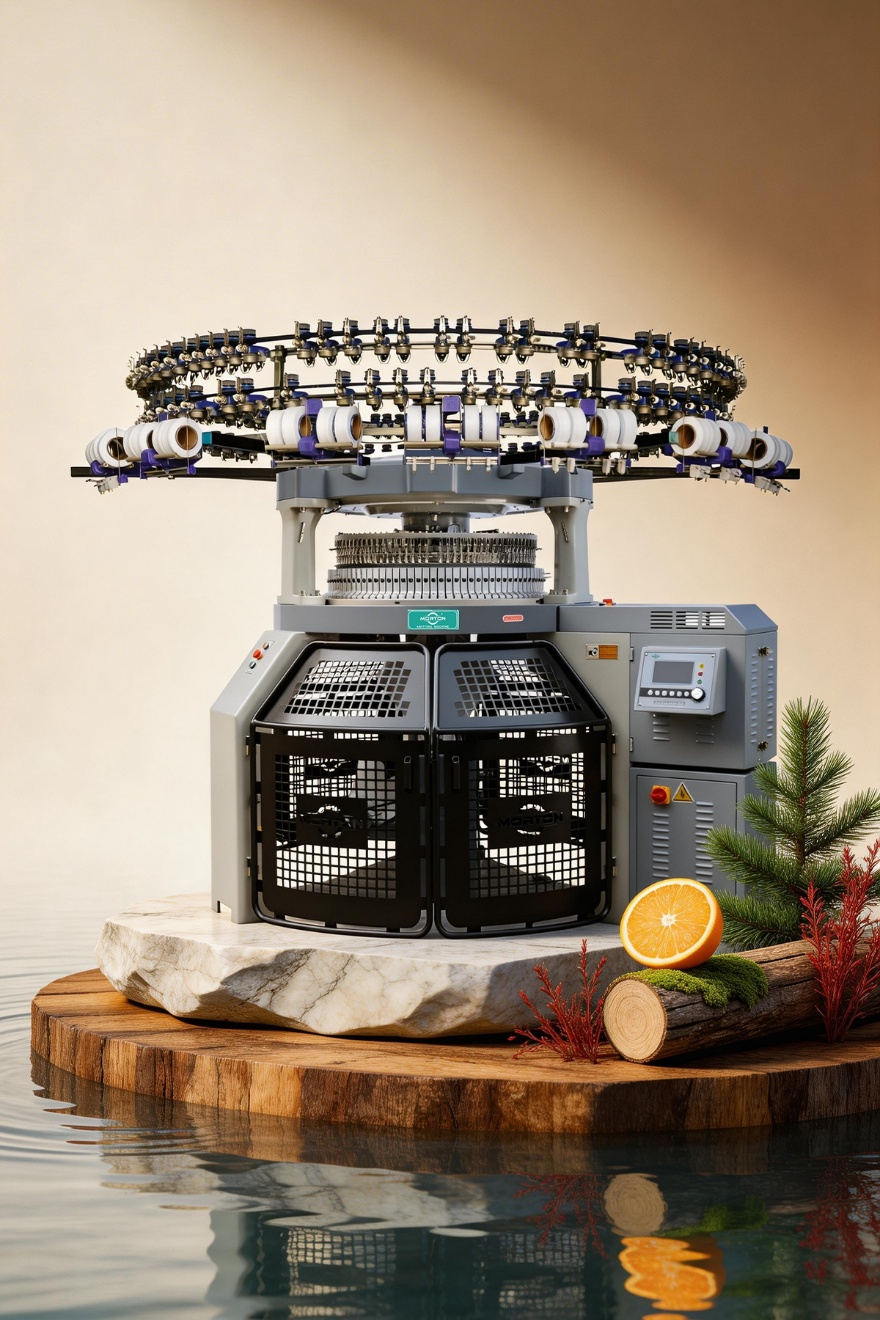
I just point to the machine running in the corner.
It's quiet. It's consistent. And it's going to be on a boat to somewhere far away by next week.
That's the only answer that really matters.
Post time: Apr-13-2026