
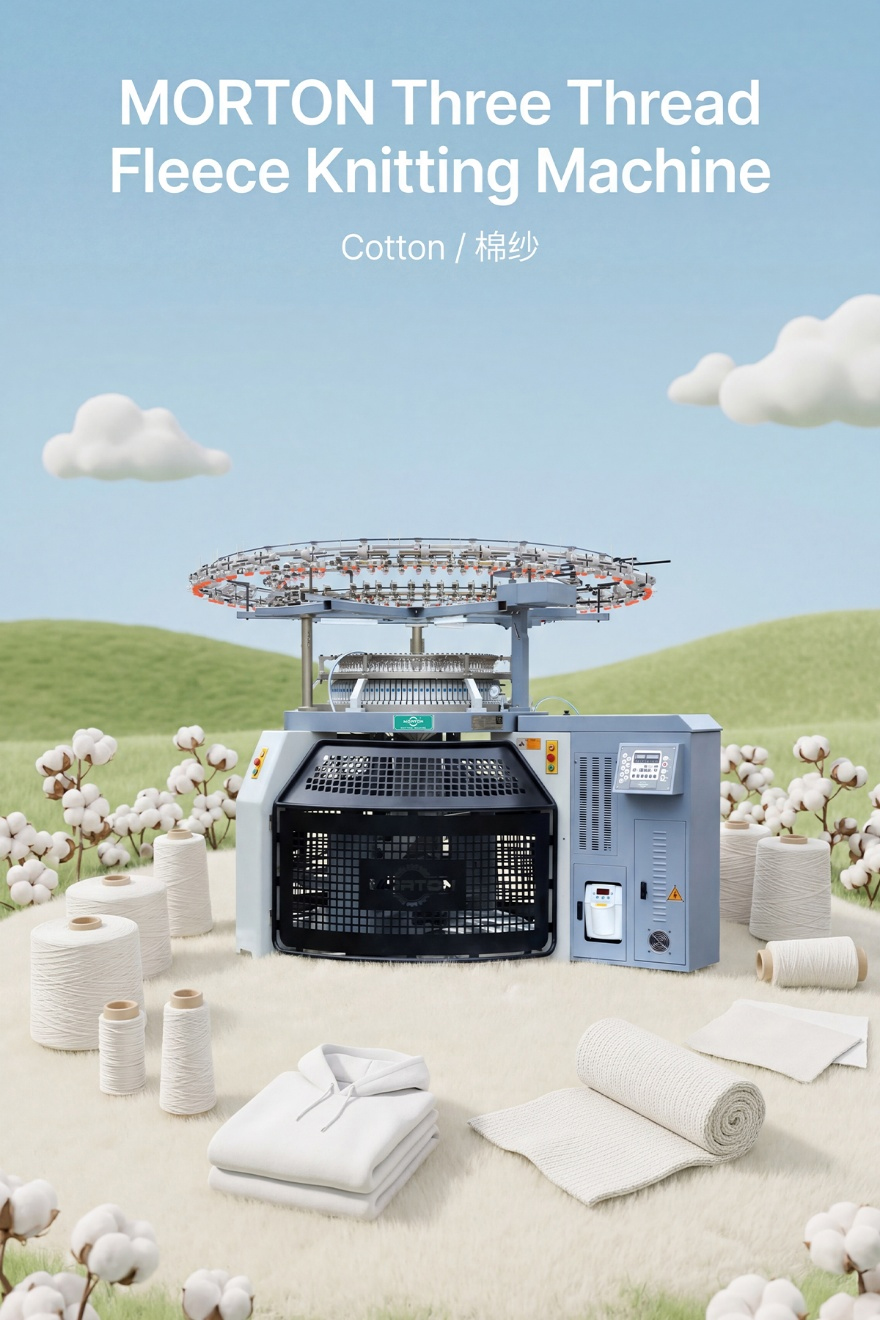
It doesn’t start in a design studio or on a store rack. It starts on the factory floor, on a three-thread fleece knitting machine.
Where the Real Comfort Comes From
That soft, warm, brushed feeling against your skin? It’s not added later. It’s built right into the fabric during knitting.
A three-thread fleece machine feeds three different yarns at the same time: one for the clean outer surface, one for structure, and one that creates the fluffy inner fleece. When everything is balanced just right, you get fabric that looks sharp on the outside and feels genuinely comfortable on the inside. Get the balance wrong, and the fleece ends up thin, patchy, or pills after a few washes.
What It’s Really Like on the Floor
The machine runs nonstop, churning out roll after roll of fabric. It looks straightforward and repetitive, but anyone who’s worked with these machines knows better.
A small drift in yarn tension, an unstable feeder, or a slightly off take-down speed can slowly throw everything out of whack. Before you know it, the fabric weight varies, the fleece becomes uneven, and you run into problems later in dyeing and cutting.
That’s why stability matters more than speed.
Why Factories Depend on These Machines
Fleece fabrics are everywhere — hoodies, sweatpants, team uniforms, casual wear. Brands don’t need one perfect sample roll. They need thousands of meters that all feel and perform the same.
A good three-thread fleece machine delivers consistent density, even fleece, and reliable results batch after batch. That means less waste, smoother production, fewer complaints, and happier customers.
How Morton Approaches It
We don’t just look at specs on paper. We care about how the machine performs after eight or twelve hours of real production.
The questions we focus on are:
- Does the yarn feeding stay stable over long runs?
- Does the fleece structure stay consistent from the first meter to the last?
- Can operators run it reliably without constant adjustments?
We’ve seen plenty of machines that look great at the beginning but start drifting after a few hours. The best ones keep performing steadily, shift after shift, giving factory managers peace of mind.
From Machine to Everyday Wear
The fabric coming off the machine is only the first step. It still needs dyeing, brushing, cutting, and sewing. But the foundation of comfort, durability, and appearance is set right here on the knitting machine.
One Last Thought
Most people pull on a sweatshirt without ever thinking about any of this — and that’s perfectly fine. But for those of us in the business, this stage is crucial.
A reliable three-thread fleece knitting machine doesn’t just produce fabric. It produces confidence. Confidence that every batch will be consistent and every garment will feel right.
That’s what we’re focused on at Morton.
MORTON — Advanced Knitting Solutions
Post time: May-08-2026