
Quanzhou’s heating up. I pulled out my phone to grab a few new T-shirts.
Scrolled through a dozen listings. Same pattern everywhere.
Every brand was flexing a bigger number, like a heavier T-shirt automatically meant a better one.
Then I noticed something off. A seller called their 500g shirt “lightweight and breathable for summer.” Fair enough. But down in the customer photos, someone had laid the shirt flat on a table. You could see the wood grain right through the fabric.
Hold on. If this thing is really 500g, how’s it still transparent?
Let’s back up and get one thing straight.
What “GSM” Actually Means
In a textile mill, nobody says “500g T-shirt.” We talk about GSM — grams per square meter. It’s the weight of one square meter of fabric. That’s it.
Higher GSM equals thicker fabric. That part is simple. But thicker doesn’t automatically mean better, and a lot of people miss that.
Would You Actually Wear 500 GSM in Summer?
Let’s picture a real 500 GSM cotton jersey. It’s almost twice the weight of a standard summer tee. Feels closer to a thin sweatshirt. Yes, it’s structured. Yes, it hangs solid. But it also traps heat, pulls on your shoulders, and costs more to make.
That’s why genuine 500 GSM T-shirts are rare in summer collections. If it’s really that heavy, you’re not wearing it comfortably in Guangzhou humidity. If a listing claims 500 GSM and the fabric’s still see-through in a photo, the number’s probably cooked.
Why People Fall for “Heavier Is Better”
Pick up a 280 GSM shirt in a store. It feels substantial. Clean. Doesn’t wrinkle if you look at it sideways. Your hand tricks your brain into thinking “quality.” Sometimes it is quality. Sometimes it’s just weight. A badly knitted 300 GSM fabric can feel worse than a tight, well-finished 200 GSM. Weight alone is a lousy measure.
The Stuff That Actually Decides a Good T-Shirt
After enough years around knitting floors, I pay attention to three things. None of them are GSM.
First, the yarn.
Combed long-staple cotton versus cheap short-staple — same GSM, completely different shirt. Good yarn runs smooth and resists pilling. Cheap yarn feels rough from day one and only gets worse.
Then there’s the knitting machine.
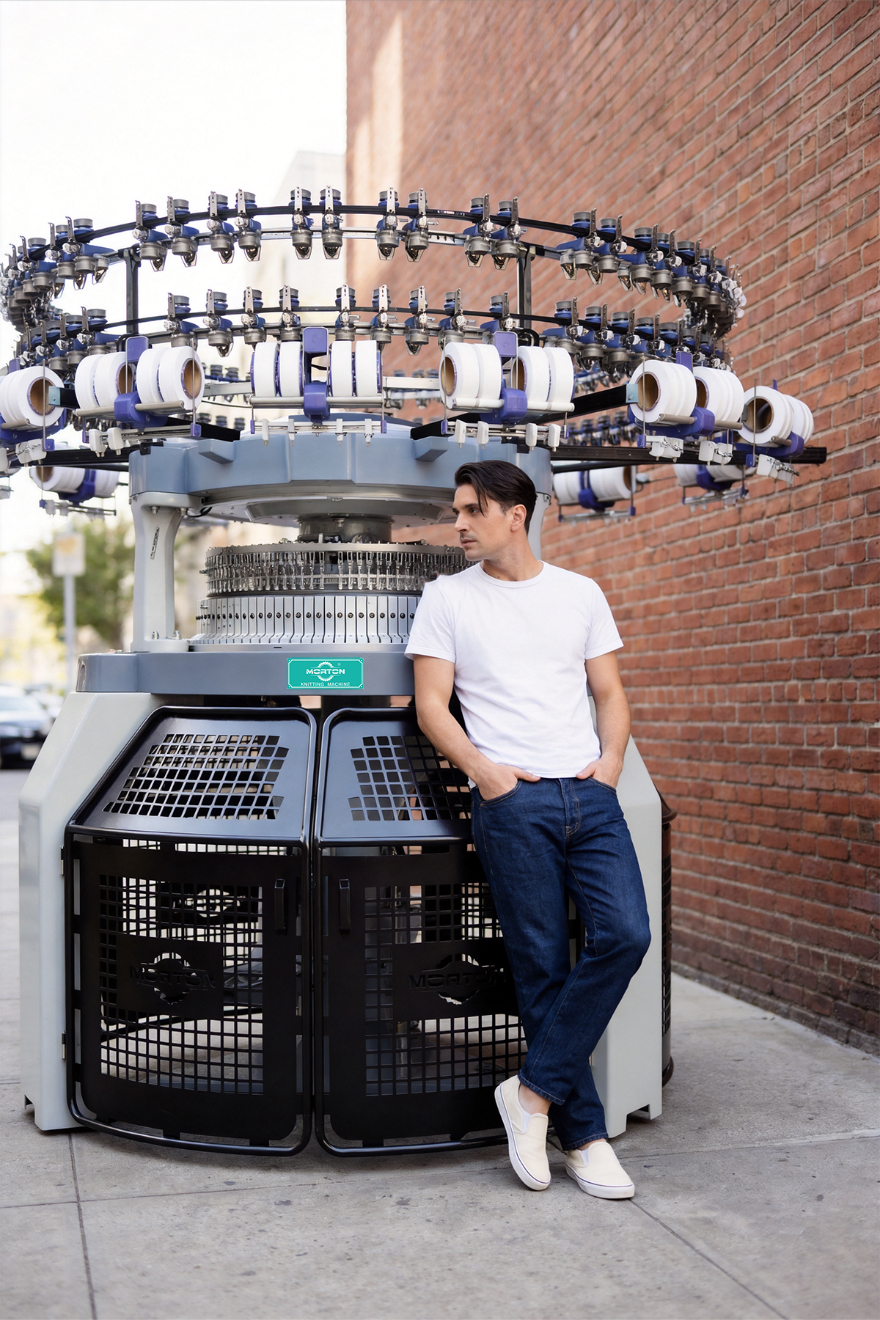
Most basic tees come off a Circular Machine running single jersey. But how that machine was set up changes everything. Loop density. Yarn tension. Gauge. If the tension drifts across the cylinder, the fabric won’t breathe evenly. An Interlock Machine can lay down a denser structure without killing the airflow — but only if it’s dialed in right. Small adjustments inside the machine make a big difference when the shirt hits your skin.
And finally, finishing.
Pre-shrinking. Softening. Compacting. Maybe mercerizing. These steps happen after the fabric leaves the machine, and they decide whether the shirt shrinks into a crop top after three washes.
So What Weight Works for Summer?
No magic number. 160-180 GSM is light and breathable for brutal heat. 180-220 is the sweet spot for everyday wear. 220-260 gives you more structure but starts feeling warm. Above 300, you’re dressing for air conditioning, not the street.
For a city like Guangzhou, where the humidity sits on your shoulders like a wet towel, comfort almost always beats fabric weight.
The T-Shirt Starts Long Before the Tag Gets Sewn On
People grab a shirt, check the brand, the color, maybe the number on the tag. But the quality got locked in way before any of that. Yarn hit the knitting machine first. Then finishing. Only after all that does it become something hanging in a store.
Post time: Jul-31-2026