
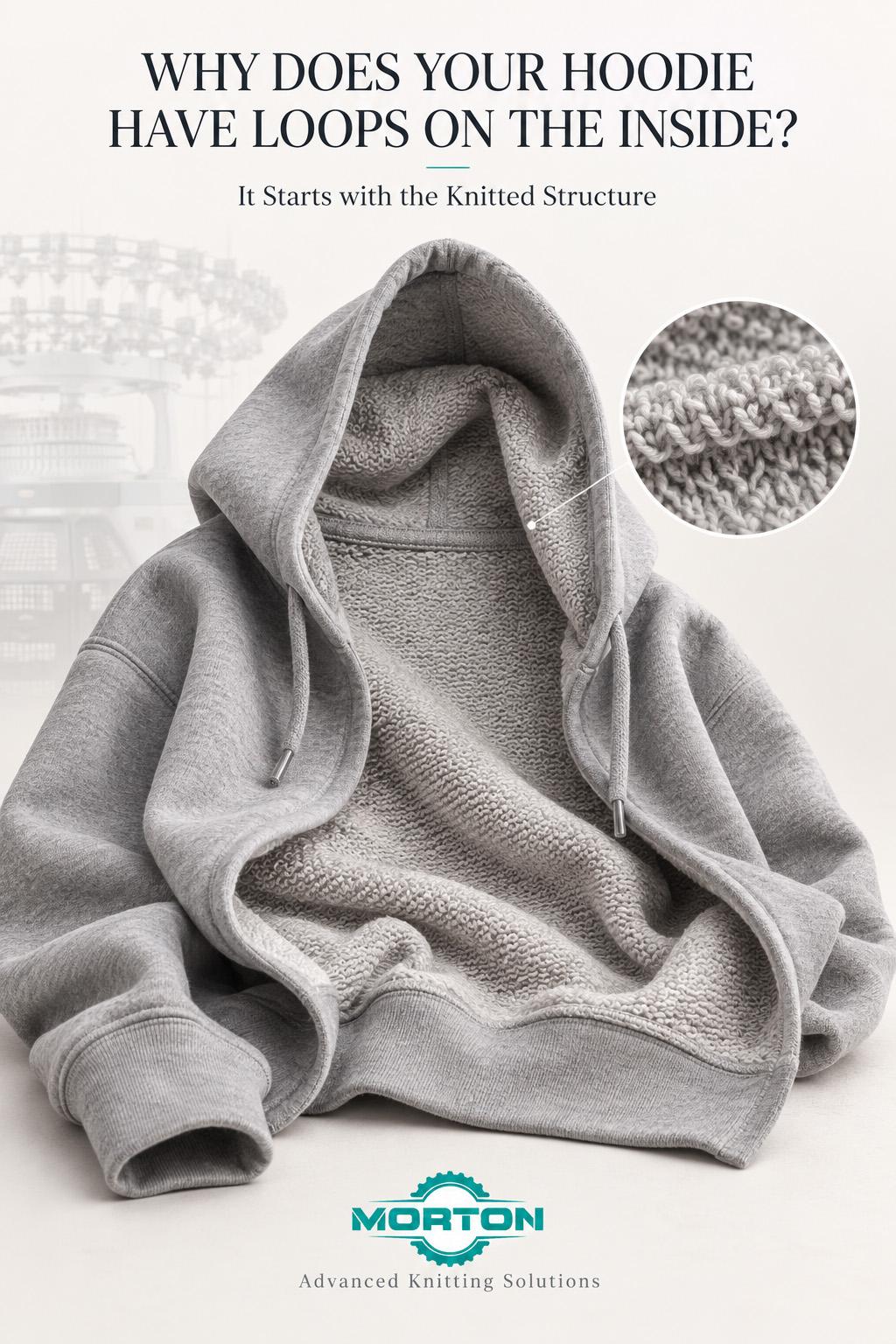
Turn a sweatshirt inside out and take a look at the fabric.
On some hoodies, the inside is covered with small, neat loops. On others, those loops are nowhere to be seen. Instead, the inside feels soft, fluffy and almost like a thin layer of fur.
Most people simply think of one as a lighter sweatshirt and the other as a warmer one. That is true from the wearer’s point of view, but from a knitting mill’s point of view, the difference is much more interesting.
⚙ Those small loops are not a mistake, and they are not added later. They are part of the fabric itself.
Long before the hoodie is cut, sewn, dyed, printed or folded into a box, its inside surface has already been designed to behave differently from its outside surface. That difference begins on the knitting machine.
One Fabric, Two Very Different Surfaces
The outside of a typical sweatshirt usually looks relatively smooth. Turn it over, however, and the structure can look completely different. This is one of the things that makes French Terry so easy to recognize.
The face of the fabric is designed to look clean and suitable for the outside of the garment, while the back contains visible loops. Those loops give the fabric more body and change the way it handles moisture and air compared with a simple Single Jersey fabric.
The Fuzzy Inside of Fleece Often Starts With Loops Too
Now take a heavier winter sweatshirt and turn that one inside out. You may not see neat loops at all. Instead, the surface feels soft and fuzzy. Fibers stand away from the fabric, creating a warmer and more insulating inner layer.
In many cases, however, the story begins with a looped backside. After the fabric is knitted, the inside can go through a brushing process. Mechanical brushing raises and opens the fibers on the back of the fabric, changing the visible loops into the familiar soft fleece surface people associate with winter sweatshirts and hoodies.
Why Sweatshirt Fabric Needs More Than One Yarn
One of the reasons fleece and French Terry fabrics are more interesting than they first appear is that the machine is not necessarily asking every yarn to do the same job. In a Three Thread Fleece structure, different yarn systems work together to form different parts of the fabric.
- ✓ Face Yarn: Contributing to the smooth exterior.
- ✓ Binding Yarn: Helping hold the structure together.
- ✓ Fleece Yarn: Forming the back loops for interior texture.
Why Loop Length Matters More Than It Looks
The loops on the back of French Terry may look simple, but their size and consistency can influence what happens later. A longer fleece loop provides more material on the back surface. If the fabric is going to be brushed, that gives the finishing process more fiber to work with.
French Terry and Fleece Are Not Just “Thick T-Shirt Fabric”
This is probably one of the most common ways people outside the textile industry think about sweatshirt fabric. In reality, the difference is not only thickness. The structure is different. A typical Single Jersey T-shirt fabric has a relatively simple construction compared with Three Thread Fleece.
The Machine Has to Follow the Fabric
This is why at MORTON we prefer to see the fabric a customer wants to make whenever possible. A machine specification by itself does not tell us enough. We want to know the yarn, GSM, structure, gauge, finished width and what the customer expects the back of the fabric to look like.
Your Hoodie Is More Complicated Than It Looks
A finished hoodie does not look particularly technical. But turn it inside out and the fabric starts telling you something about how it was made. The most ordinary clothes often contain the most interesting details.
At MORTON, we build Circular Knitting Machines and Three Thread Fleece Knitting Machines for mills producing fabrics such as French Terry and fleece.
MORTON — Advanced Knitting Solutions
Post time: Sep-18-2026