
Customers see your machine long before they hear it running.
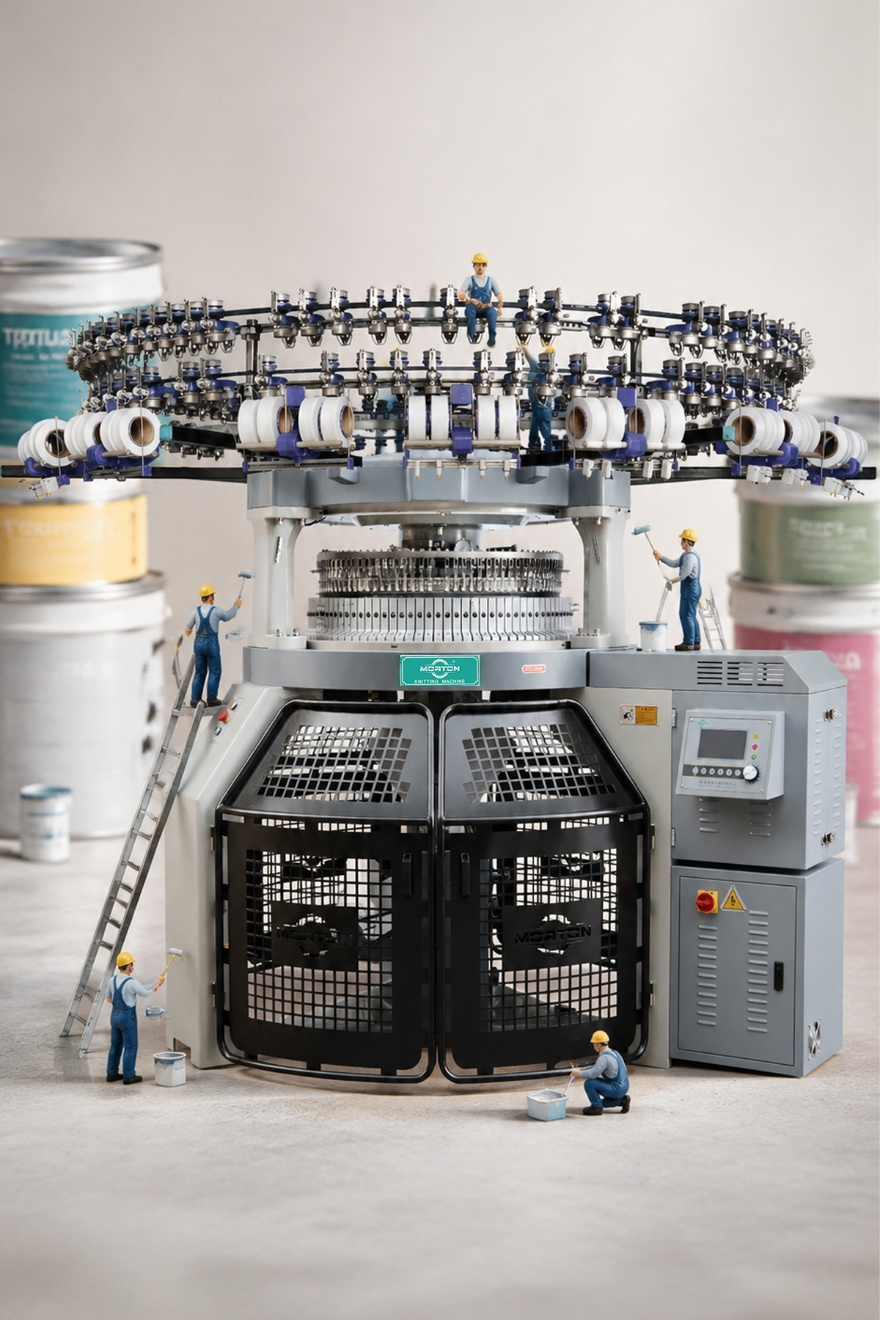
They notice the shape, the build, and the surface finish. And whether they’re conscious of it or not, the paint plays a big part in that first impression.
A clean, even coat instantly gives the feeling that the machine has been properly looked after. On the flip side, patchy coverage, rough texture, or inconsistent color stands out immediately — even if people don’t mention it.
That’s why at Morton we’ve never treated painting as just a final cosmetic step.
Good Paint Doesn’t Happen by Accident
Finding the right paint took us much longer than most people would expect.
Over the years we’ve tried different suppliers, different finishes, and hundreds of color samples. Some looked fine under factory lights but turned patchy in daylight. Others seemed smooth at first, but after a few months of real use, the surface started to degrade.
We kept testing, adjusting, and comparing.
Even today, our team sometimes inspects painted frames with a flashlight, checking how the light reflects off the surface. That’s when tiny imperfections become obvious.
It might sound overkill for “just paint,” but these small details show up over time.
The Real Difference Shows Up Years Later
Almost every new machine looks decent on day one.
The real test comes after years of actual factory life.
Circular knitting machines and interlock machines don’t live in a showroom. They work in environments full of oil mist, humidity, fabric dust, and nonstop operation. In hot or humid climates, cheap paint eventually fails.
Edges start peeling. Corners begin to rust. The color slowly fades or shifts.
Once corrosion starts, it’s hard to stop.
That’s why we care about how the machine looks not just when it leaves our factory, but how it will still look five or ten years from now.
Multiple Layers, Multiple Inspections
Painting starts on the machine frames before assembly even begins.
Some parts get sprayed multiple times to ensure even coverage and better protection. During inspection, we check coating thickness, edge coverage, and how the surface reflects under strong light — because those are exactly the spots where problems usually appear first.
Most customers never see this process, but they definitely feel the result.
Paint Reflects More Than Just Appearance
Nobody buys a knitting machine because of the paint.
We know that.
But the finish often tells a bigger story about the manufacturer’s attitude. If someone cuts corners on visible details, customers naturally start wondering what else they might have cut corners on.
That’s why we take surface finishing seriously. Not for decoration, but because serious factory equipment should still look solid and professional many years after installation.
At the end of the day, good paint isn’t about making the machine look flashy. It’s about making sure it still looks right long after that first impression fades.
MORTON — Advanced Knitting Solutions
Post time: May-11-2026